
⭐ Jack Botanicals - America's #1 Kratom Brand
AKA Approved | Best Quality & Prices Guaranteed
🎉 EXCLUSIVE: Use Code JACK30 for 30% OFF
Claim Your Discount Now →The legal landscape surrounding kratom in Canada has left many consumers confused and uncertain about their rights to purchase, possess, and use this controversial botanical substance. While kratom enjoys varying degrees of legal protection across different countries and states, is kratom legal in Canada remains a complex question with serious implications for users, vendors, and law enforcement alike.
- Kratom is currently not approved for human consumption by Health Canada and cannot be legally sold as a dietary supplement or food product
- The substance exists in a legal gray area where possession for personal use may not be explicitly prohibited, but commercial sales are restricted
- Import regulations strictly control kratom entering Canada, with packages subject to seizure by border authorities
- Canadians seeking kratom often turn to online vendors or cross-border purchases, though both carry legal risks
- Provincial regulations may add additional restrictions beyond federal law, creating a patchwork of enforcement approaches
Understanding Canada’s Current Kratom Legal Status
The question of whether kratom is legal in Canada cannot be answered with a simple yes or no. Unlike some jurisdictions that have explicitly banned or fully legalized the substance, Canada maintains a complex regulatory framework that creates uncertainty for consumers and businesses alike.
Health Canada’s Official Position
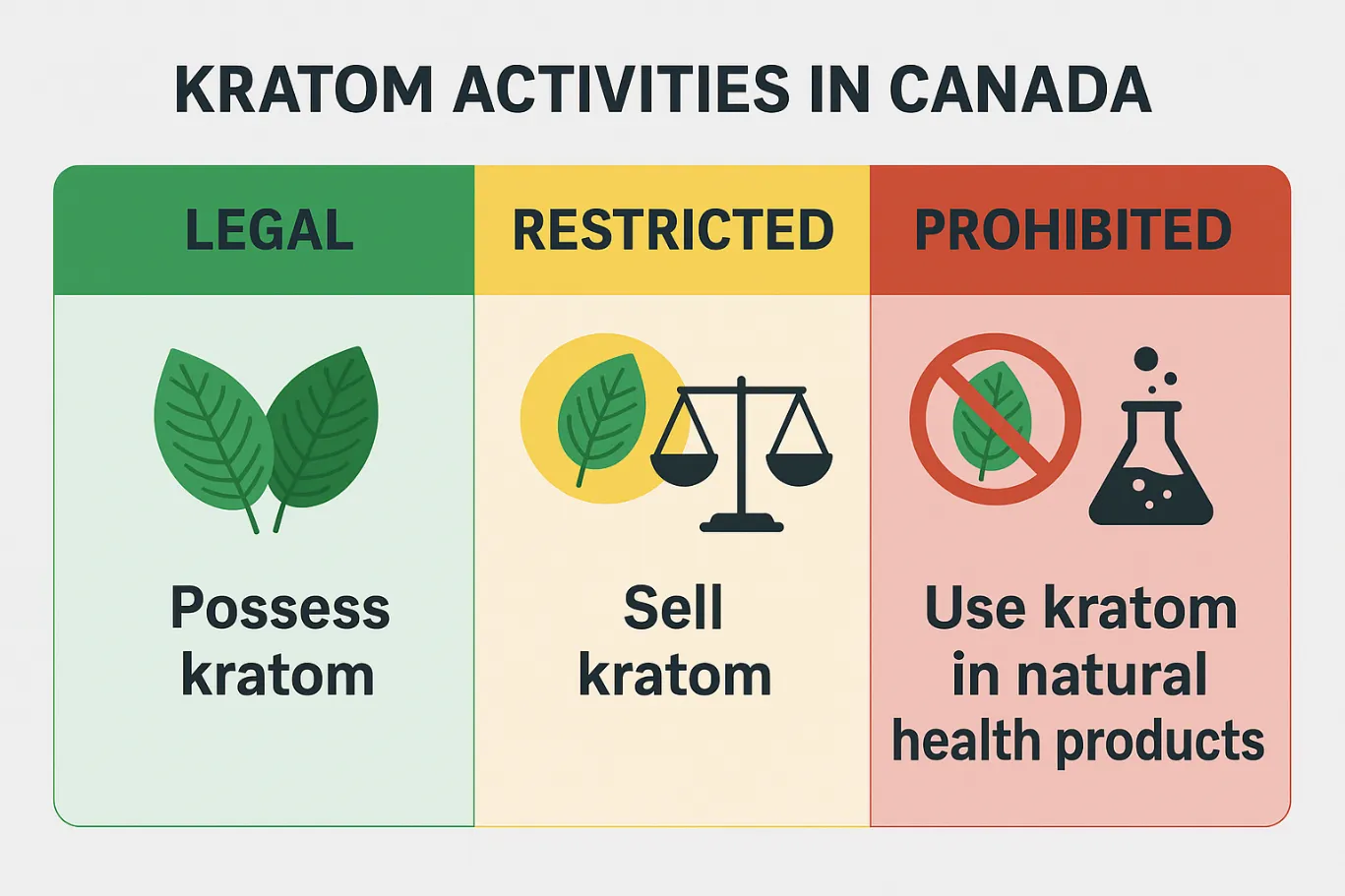
Health Canada, the federal department responsible for public health policy, has not approved kratom for human consumption under the Food and Drugs Act. This means that kratom cannot be legally:
- Sold as a dietary supplement
- Marketed for human consumption
- Advertised with health claims
- Distributed through traditional retail channels
However, this regulatory stance does not automatically make kratom a controlled substance under the Controlled Drugs and Substances Act (CDSA). This distinction creates the legal gray area that characterizes kratom’s status in Canada.
Federal vs. Provincial Jurisdiction
Canada’s federal system means that both federal and provincial governments may have authority over different aspects of kratom regulation. While Health Canada sets national food and drug policies, provinces can implement additional restrictions on substances within their borders.
Federal Level:
- Food and drug safety regulations
- Import/export controls
- Criminal law enforcement
Provincial Level:
- Consumer protection laws
- Business licensing requirements
- Additional health and safety measures
Import and Border Control Regulations
One of the most significant challenges facing Canadian kratom users involves border control and import regulations. The Canada Border Services Agency (CBSA) actively monitors shipments containing kratom and has the authority to seize packages that violate import regulations.
Common Import Issues
Many Canadians attempting to order kratom online from international vendors encounter several obstacles:
Package Seizures: Border authorities regularly confiscate kratom shipments, often without advance notice to the recipient.
Customs Delays: Even packages that eventually clear customs may face significant delays during inspection processes.
Documentation Requirements: Proper labeling and documentation become crucial for any kratom products attempting to enter Canada.
Quantity Restrictions: Large quantities may trigger additional scrutiny and potential legal complications.
Legal Alternatives for Obtaining Kratom
Given the import restrictions, Canadian consumers have explored various approaches to accessing kratom legally:
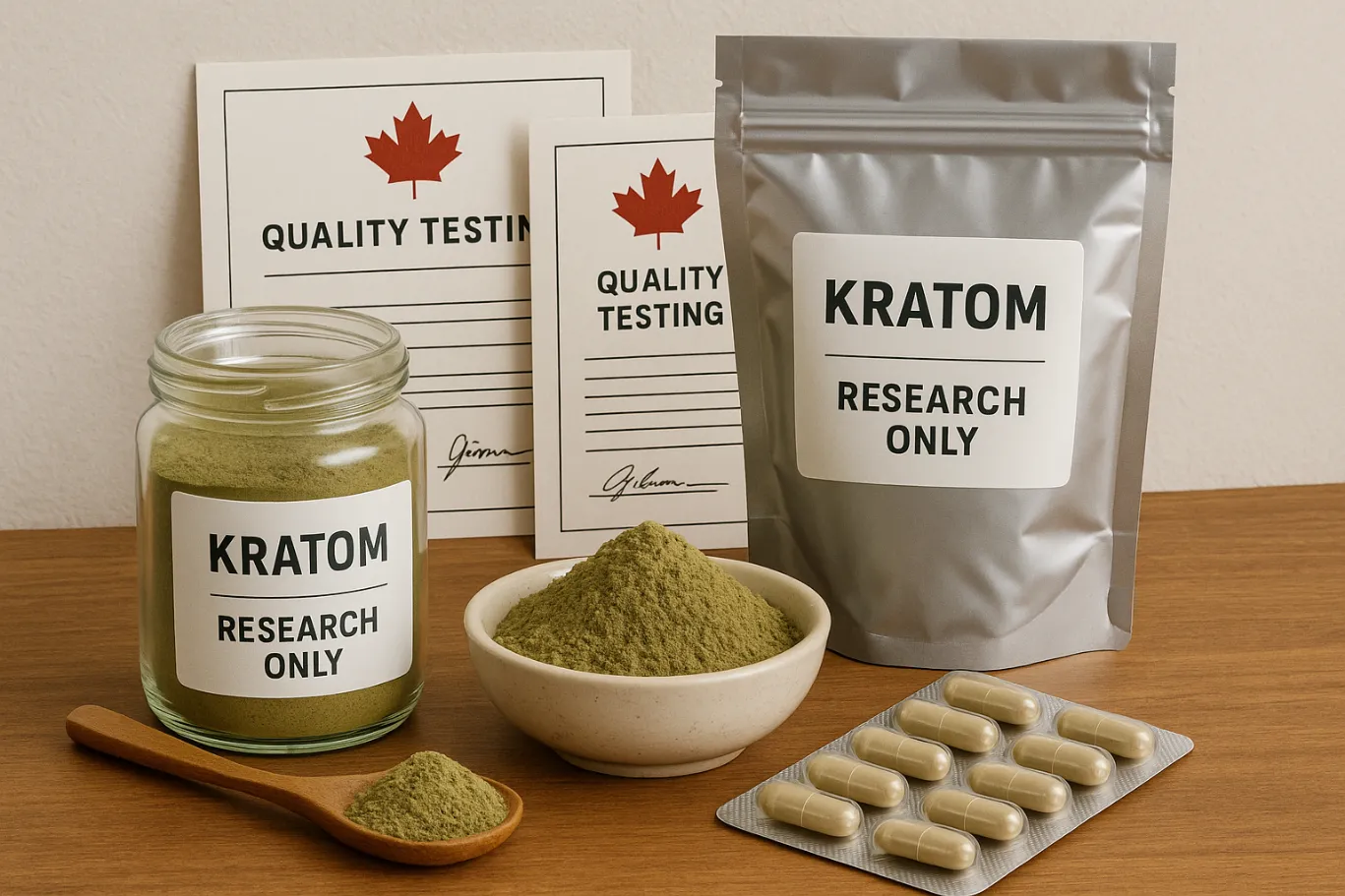
- Research Purposes: Some vendors market kratom “not for human consumption” as research materials
- Cross-Border Shopping: Traveling to jurisdictions where kratom is legal for purchase
- Domestic Sources: Finding Canadian-based suppliers operating within legal boundaries
- Alternative Botanicals: Exploring legal herbal alternatives with similar properties
Provincial Variations in Kratom Enforcement
While federal law provides the overarching framework, individual provinces may interpret and enforce kratom regulations differently. This creates a patchwork of enforcement approaches across Canada.
British Columbia
British Columbia has generally followed federal guidelines without implementing additional provincial restrictions. However, local health authorities maintain the right to issue warnings or take action against businesses selling kratom for human consumption.
Ontario
As Canada’s most populous province, Ontario’s approach to kratom significantly impacts national trends. The province has seen various enforcement actions against retailers attempting to sell kratom products, particularly those making health claims.
Quebec
Quebec’s unique legal system and strong provincial autonomy have led to particularly strict interpretations of kratom regulations. The province has been aggressive in pursuing businesses that sell kratom products.
Alberta
Alberta has maintained a relatively moderate approach, focusing enforcement efforts on businesses making explicit health claims rather than pursuing individual users.
🍃 Canadian Kratom Legal Status Checker
Get personalized guidance based on your location and intended use
Commercial Sales and Business Regulations
🌿 #1 Kratom Brand - AKA Approved
Premium Quality Kratom at Unbeatable Prices
💥 Use Code: JACK30 - Save 30% OFF!
Shop Jack Botanicals Now →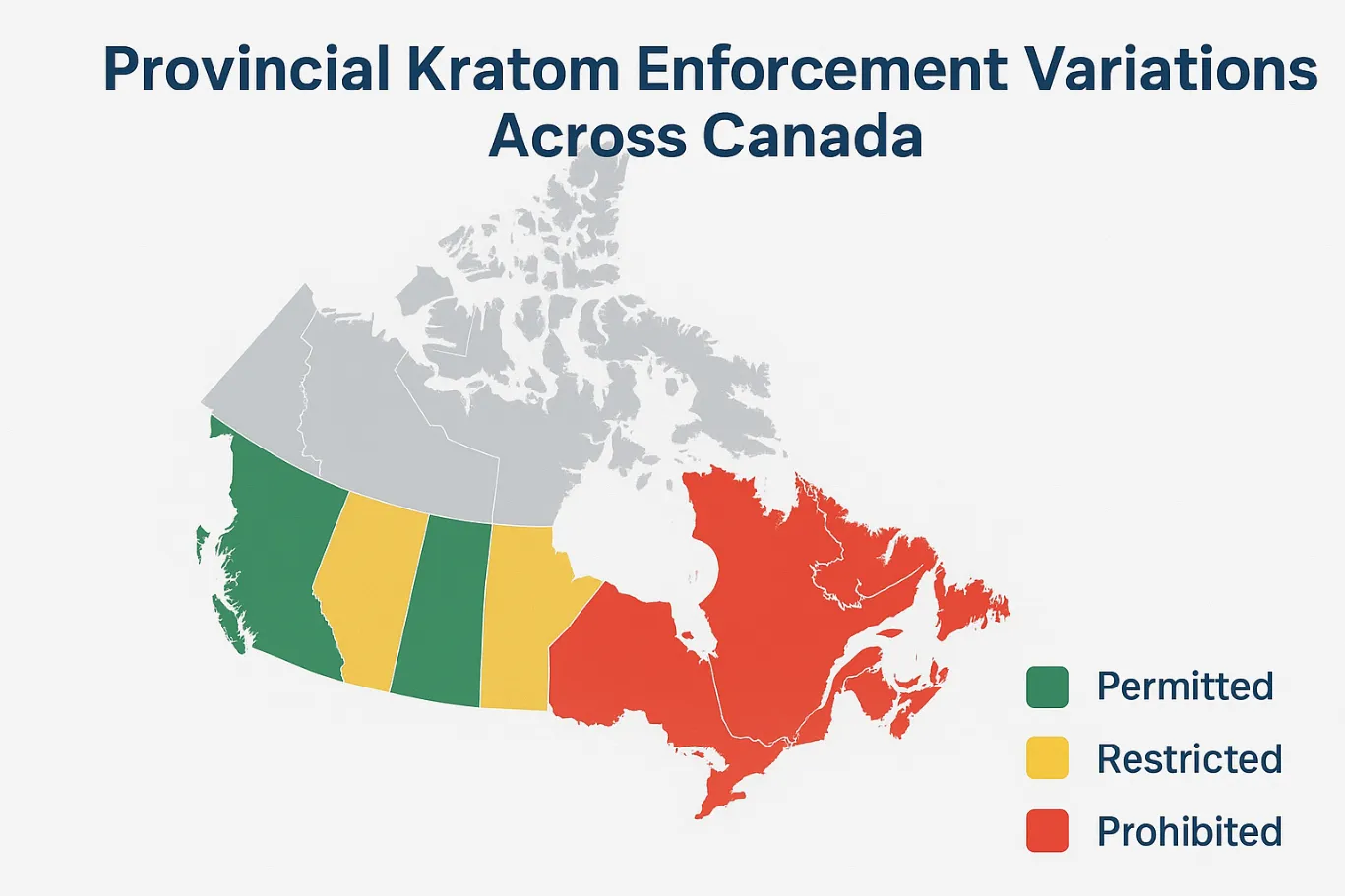
The commercial landscape for kratom in Canada presents significant challenges for entrepreneurs and retailers interested in entering this market. Understanding the regulatory framework governing kratom sales is crucial for anyone considering kratom-related business activities.
Health Canada’s Enforcement Approach
Health Canada has consistently maintained that kratom cannot be sold for human consumption under current regulations. This stance has led to various enforcement actions against businesses attempting to market kratom products:
Warning Letters: Health Canada regularly issues warning letters to businesses selling kratom products with health claims or for human consumption.
Product Seizures: Authorities may seize kratom inventory from businesses operating outside regulatory guidelines.
Business Shutdowns: Some retailers have been forced to cease kratom sales entirely following regulatory pressure.
Financial Penalties: Businesses may face significant fines for violating food and drug regulations.
Alternative Business Models
Despite regulatory challenges, some Canadian businesses have found ways to operate within legal boundaries:
- Research Chemical Sales: Marketing kratom exclusively for research purposes with clear “not for human consumption” labeling
- Educational Services: Providing information and education about kratom without direct sales
- Consultation Services: Helping consumers navigate legal options for accessing kratom
- Alternative Products: Focusing on legal botanical alternatives with similar properties
Finding Trusted Kratom Vendors
For Canadians seeking reliable access to kratom, identifying trustworthy vendors becomes a critical consideration. The legal complexities surrounding kratom in Canada make vendor selection particularly important for ensuring both quality and legal compliance.
Domestic Vendor Considerations
Canadian-based kratom vendors must navigate complex regulatory requirements while serving customer needs. When evaluating domestic vendors, consider these factors:
Legal Compliance: Ensure vendors operate within Health Canada guidelines and avoid making prohibited health claims.
Product Labeling: Look for proper labeling that indicates “not for human consumption” where required by law.
Business Transparency: Choose vendors that clearly communicate their legal status and compliance measures.
Quality Testing: Prioritize vendors that provide third-party testing results for purity and contaminants.
Many consumers find success working with trusted vendors who understand Canadian regulations and maintain transparent business practices.
International Vendor Risks and Benefits
While domestic options may be limited, international vendors present both opportunities and risks for Canadian consumers:
Benefits:
- Wider product selection
- Potentially lower prices
- Access to specialized strains
- Established quality testing protocols
Risks:
- Package seizure at customs
- Legal complications with imports
- Longer shipping times
- Limited recourse for problems
Red Flags to Avoid
Regardless of vendor location, certain warning signs should prompt caution:
🚩 Health Claims: Vendors making specific medical or therapeutic claims about kratom
🚩 Unrealistic Pricing: Prices significantly below market rates may indicate quality issues
🚩 Poor Communication: Vendors who are unresponsive or evasive about legal compliance
🚩 No Testing: Absence of third-party lab testing for purity and contaminants
🚩 Pressure Tactics: High-pressure sales techniques or urgent purchase demands
Kratom Strains and Their Availability in Canada
Understanding different kratom varieties can help Canadian consumers make informed decisions about their purchases. While availability may be limited due to legal restrictions, knowledge of strain characteristics remains valuable.
Popular Kratom Varieties
Red Vein Strains: Known for their relaxing properties, red vein kratom varieties like Red Bali remain popular among users seeking calming effects.
Green Vein Strains: Often considered balanced options, green vein varieties may provide moderate effects suitable for various users.
White Vein Strains: Typically associated with energizing properties, white vein strains appeal to users seeking stimulating effects.
Specialty Blends: Some vendors offer proprietary blends combining different strains for unique effect profiles.
Regional Strain Preferences
Different regions of Canada may show preferences for particular kratom varieties based on local availability and cultural factors:
- Urban Areas: Tend to have access to wider variety selections through online vendors
- Rural Regions: May rely more heavily on cross-border shopping or limited local sources
- Border Communities: Often have easier access to kratom from neighboring jurisdictions
Understanding where to buy kratom becomes particularly important for Canadian consumers navigating these regional differences.
Cost Considerations for Canadian Kratom Users

The legal complexities surrounding kratom in Canada significantly impact pricing and availability, making cost considerations particularly important for consumers.
Pricing Factors
Several factors influence kratom costs for Canadian consumers:
Import Duties and Taxes: Cross-border purchases may incur additional fees and customs charges.
Shipping Costs: International shipping often adds significant expense to kratom purchases.
Risk Premiums: Vendors may charge higher prices to compensate for legal and operational risks.
Limited Competition: Fewer legal vendors may result in higher prices due to reduced competition.
Quality Testing: Reputable vendors invest in testing, which may increase product costs.
Budget-Friendly Strategies
Canadian kratom users can employ various strategies to manage costs while maintaining quality:
- Bulk Purchasing: Buying larger quantities when legally permissible to reduce per-unit costs
- Vendor Comparison: Researching multiple vendors to find competitive pricing
- Seasonal Sales: Taking advantage of promotional periods and discounts
- Group Purchases: Coordinating with other users to share shipping costs
- Local Sourcing: Finding domestic vendors to avoid international shipping fees
Legal Alternatives and Substitutes
Given the regulatory challenges surrounding kratom in Canada, many consumers explore legal alternatives that may provide similar benefits without the associated legal risks.
Botanical Alternatives
Several legal botanical substances available in Canada may appeal to kratom users:
Kanna (Sceletium tortuosum): A South African succulent with traditional uses for mood support.
Blue Lotus: An Egyptian flower with historical significance and reported calming properties.
Wild Dagga: A mint family plant native to South Africa with traditional ceremonial uses.
Kava Kava: While regulated, kava may be available in some forms and jurisdictions within Canada.
Herbal Supplements
Legal herbal supplements available through traditional retail channels may provide some benefits sought by kratom users:
- Ashwagandha: An adaptogenic herb available in health stores
- Rhodiola Rosea: Another adaptogen with stress-support properties
- Passionflower: A calming herb available in various forms
- Valerian Root: Traditional relaxation support available legally
Consultation with Healthcare Providers
For individuals using kratom for wellness purposes, consulting with healthcare providers about legal alternatives may provide valuable guidance and safer options.
Staying Informed About Legal Changes
The regulatory landscape surrounding kratom continues to evolve, making it essential for Canadian consumers to stay informed about potential legal changes.
Monitoring Regulatory Updates
Several strategies can help Canadians stay current with kratom-related legal developments:
Government Resources: Regularly checking Health Canada websites and publications for policy updates.
Legal News Sources: Following legal news outlets that cover drug policy and regulatory changes.
Advocacy Organizations: Connecting with kratom advocacy groups that monitor legislative developments.
Professional Networks: Engaging with lawyers or consultants specializing in drug policy and regulation.
Understanding Legislative Processes
Kratom’s legal status could change through various governmental processes:
- Federal Regulatory Changes: Health Canada could modify its position on kratom classification
- Provincial Legislation: Individual provinces might implement specific kratom regulations
- Court Decisions: Legal challenges could influence kratom’s regulatory status
- International Agreements: Trade agreements or international drug treaties might affect domestic policy
Regional Enforcement Variations
While federal law provides the framework for kratom regulation in Canada, enforcement approaches can vary significantly between different regions and jurisdictions.
Urban vs. Rural Enforcement
Urban Areas: Typically see more active enforcement due to larger regulatory agencies and more visible retail operations.
Rural Regions: May experience less frequent enforcement but could face more severe consequences when violations are discovered.
Border Communities: Often subject to increased scrutiny due to proximity to international boundaries and higher customs enforcement presence.
Law Enforcement Priorities
Different law enforcement agencies may prioritize kratom enforcement differently:
- Health Inspectors: Focus on businesses making health claims or selling for human consumption
- Customs Officials: Concentrate on import violations and package seizures
- Local Police: Generally less involved unless criminal activity is suspected
- Provincial Regulators: May target specific business licensing violations
Understanding these enforcement patterns can help Canadians make more informed decisions about their kratom-related activities.
International Comparisons and Context
Understanding how other countries regulate kratom can provide valuable context for Canada’s approach and potential regulatory directions.
United States Variations
The United States presents a complex patchwork of kratom regulations that varies significantly by state. Some states have legal kratom markets, while others maintain strict prohibitions. This state-by-state approach contrasts with Canada’s more uniform federal framework.
Interestingly, some U.S. states like Indiana have specific kratom regulations that could serve as models for potential Canadian policy development.
European Approaches
European Union countries generally maintain stricter controls on kratom, with most member nations prohibiting its sale for human consumption. This regulatory approach aligns more closely with Canada’s current stance.
Southeast Asian Policies
Countries in Southeast Asia, where kratom grows naturally, have varying approaches ranging from traditional acceptance to strict prohibition. These policies often reflect cultural attitudes toward traditional plant medicines.
Frequently Asked Questions About Kratom in Canada
Consumer Safety and Quality Considerations
Regardless of legal status, kratom quality and safety remain paramount concerns for Canadian consumers navigating this complex market.
Testing and Quality Assurance
Reputable vendors, whether domestic or international, should provide comprehensive testing for:
Heavy Metals: Lead, mercury, cadmium, and arsenic contamination testing
Microbials: Bacteria, yeast, mold, and pathogen screening
Pesticides: Agricultural chemical residue testing
Alkaloid Content: Verification of active compound levels
Adulterants: Screening for synthetic additives or other substances
Business Compliance Strategies
For entrepreneurs interested in kratom-related businesses in Canada, understanding compliance strategies becomes essential for legal operation.
Legal Business Models
Several approaches may allow kratom-related businesses to operate within Canadian law:
Research Supply: Selling kratom exclusively for research purposes with appropriate labeling and documentation.
Educational Services: Providing information and education about kratom without direct product sales.
Consulting: Helping consumers understand legal options and navigate regulatory requirements.
Alternative Products: Focusing on legal botanical alternatives while maintaining kratom expertise.
Conclusion
The question “is kratom legal in Canada” reveals a complex regulatory landscape that requires careful navigation by consumers, businesses, and advocates alike. While kratom is not explicitly banned for personal possession, Health Canada’s restrictions on commercial sales create significant challenges for those seeking legal access to this botanical substance.
For those choosing to engage with kratom despite these challenges, prioritizing safety, quality, and legal compliance becomes essential. Working with reputable vendors, staying informed about regulatory changes, and consulting with legal professionals when appropriate can help minimize risks while navigating this complex landscape.
For those seeking more information about kratom availability and regulations, consulting resources about where to find kratom near you and understanding different strain options like Bali kratom can provide valuable context for making informed decisions within the current legal framework.
William is fascinated by the role of plants in human culture and history. With a background in anthropology, he explores how communities developed traditions that integrate natural elements into social and spiritual life. William values the storytelling aspect of cultural knowledge, seeing it as a way to keep heritage alive. His perspective emphasizes education, appreciation, and the responsible preservation of nature’s role in cultural practices.