
⭐ Jack Botanicals - America's #1 Kratom Brand
AKA Approved | Best Quality & Prices Guaranteed
🎉 EXCLUSIVE: Use Code JACK30 for 30% OFF
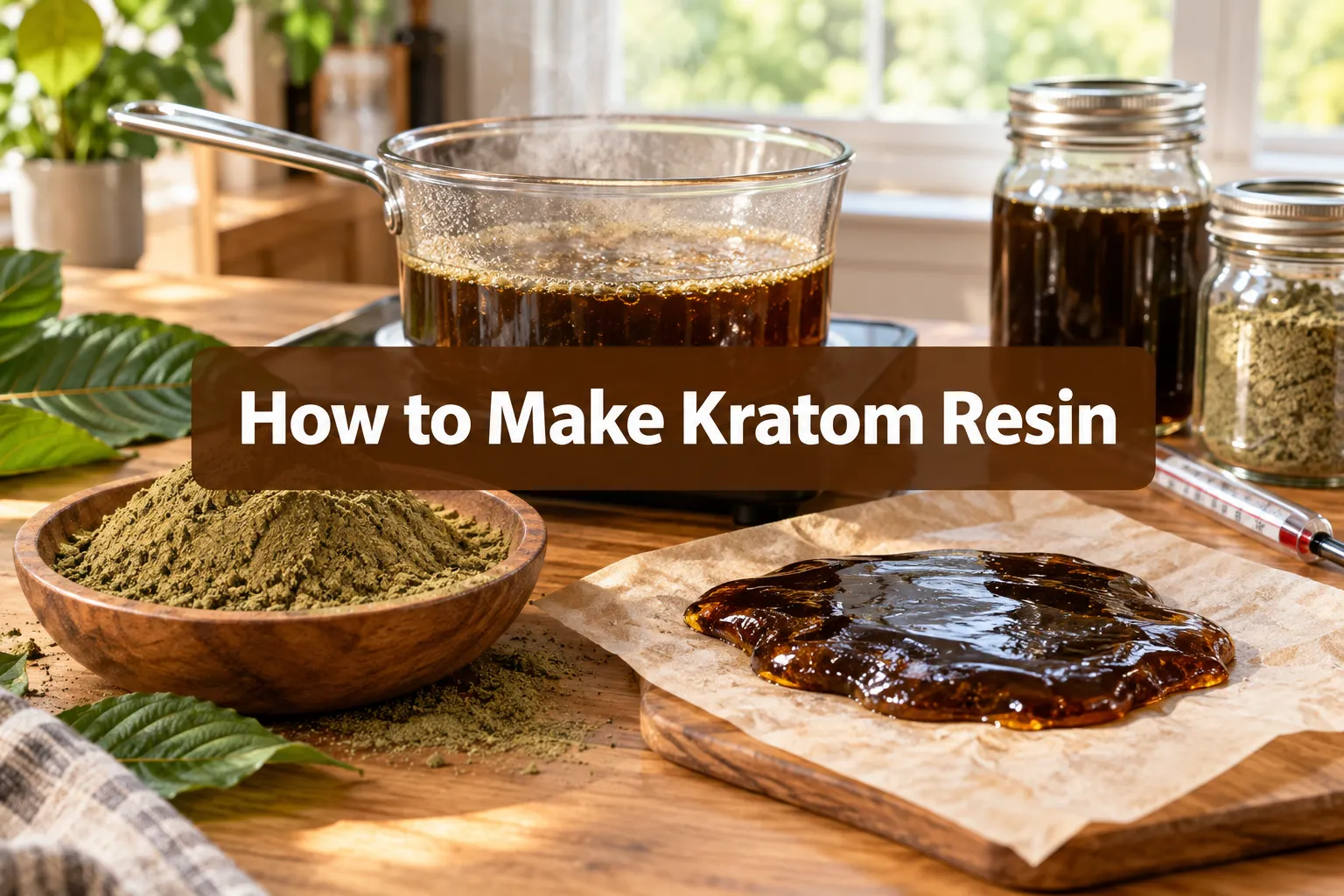
Claim Your Discount Now →Kratom resin is a concentrated extract made by simmering kratom powder in water (often acidified with lemon juice or vinegar) and reducing the liquid down to a thick, scrapable paste. The process takes several hours of active work plus a full day of drying, and it concentrates alkaloids far beyond what raw powder delivers. Based on testing reported across extraction guides, yield and potency depend heavily on starting leaf quality, pH control, and heat management [9][10]. This matters because concentrated extracts carry different dosing and safety considerations than plain powder, and regulators are paying closer attention to them in 2026.
What Is Kratom Resin and How Does It Differ From Kratom Powder
Kratom resin is raw kratom powder reduced into a dense, concentrated paste through heat and evaporation. Powder is unprocessed dried leaf; resin is what remains after water pulls alkaloids out of that leaf and the liquid is boiled down.
🌿 #1 Kratom Brand - AKA Approved
Premium Quality Kratom at Unbeatable Prices
💥 Use Code: JACK30 - Save 30% OFF!
Shop Jack Botanicals Now →
The structure shows three core differences:
- Concentration: Resin packs more alkaloid mass into less volume. A pea-sized piece of resin can equal several grams of raw powder.
- Texture and dosing: Powder is measured by volume or weight with a scale. Resin is measured by small, sticky portions, which makes consistent dosing harder.
- Shelf stability: Dry powder resists moisture better. Resin is hygroscopic and degrades faster once exposed to air.
Practical takeaway: if consistent dosing matters to you, powder or standardized liquid extracts are the more reliable choice. Readers comparing kratom strains for baseline effects should test in powder form before ever converting a batch to resin.
How to Make Kratom Resin: Extract Basics and the Equipment You Need
You need basic kitchen equipment, not a lab setup. The core list: a large pot, a fine strainer or cheesecloth, a kitchen scale, a thermometer, parchment paper, and an airtight storage jar.
What to prioritize:
- Non-reactive pot (stainless steel or glass, not aluminum) to avoid off-flavors and unwanted reactions with acid.
- Kitchen scale accurate to 1 gram for consistent batch ratios.
- Thermometer to keep liquid below a hard boil, generally 180 to 200°F.
- Cheesecloth or fine mesh strainer to separate plant fiber from liquid.
- pH strips if using the acid-water method, to confirm the solution sits in the mildly acidic range.
What to skip: pressure cookers, high-proof solvents, and anything requiring open flame near alcohol vapor. Based on testing across home extraction guides, added complexity rarely improves yield enough to justify the risk [9].
Step by Step Process for Making Kratom Resin
The proven pattern is a water or acid-water reduction done in four stages: extract, strain, reduce, dry. Step by step, it looks like this:
- Measure powder. Weigh 1 to 2 ounces of kratom powder per batch.
- Add acidified water. Combine powder with water and the juice of one to two lemons (or a splash of vinegar) in the pot. The acid helps pull alkaloids into solution [9][10].
- Simmer low and slow. Heat to a gentle simmer, 180 to 200°F, for 45 to 60 minutes. Do not boil.
- Strain the liquid. Pour through cheesecloth into a clean container, squeezing out remaining liquid from the plant matter.
- Repeat if desired. A second simmer on the same leaf material can pull additional alkaloids, though yield drops each pass.
- Reduce the combined liquid. Simmer the strained liquid uncovered until it thickens into a syrup.
- Spread to dry. Pour the syrup onto parchment paper in a thin layer and let it air-dry 24 to 72 hours until firm.
- Scrape and store. Collect the hardened resin and transfer it to an airtight jar.
Common mistake: rushing the drying stage. Resin that looks firm on the surface can still be wet underneath, which invites mold during storage.
How Long Does It Take to Make Kratom Resin
Active cooking time runs 2 to 4 hours. Drying adds another 24 to 72 hours depending on humidity and layer thickness. Total project time from start to a storable batch is typically 2 to 4 days.
This matters because impatience is the single biggest driver of failed batches. A thick resin layer that looks dry on day one can still hold moisture on day three. Consistent result: thinner layers spread on parchment dry faster and more evenly than thick pours.
What’s the Best Solvent to Use for Kratom Extraction
Acid-water is the best solvent for most home users because it balances alkaloid extraction with low risk and no special ventilation needs. Alcohol extraction pulls alkaloids faster but introduces flammability risk and requires a well-ventilated space.
| Method | Alkaloid pull | Time needed | Risk level | Best for |
|---|---|---|---|---|
| Plain water | Moderate | 4-6 hours | Low | Beginners testing the process |
| Acid-water (lemon/vinegar) | High | 2-4 hours | Low | Most home extractors |
| Alcohol (ethanol) | Very high | 1-2 hours | Moderate-high (fire, fumes) | Experienced users with ventilation |
The data confirms acid-water extraction as the proven pattern in most published home guides, largely because citric or acetic acid improves alkaloid solubility without the handling risks of high-proof alcohol [9][10].
How Much Kratom Powder Do I Need to Make Resin
A standard small batch uses 1 to 2 ounces (28 to 56 grams) of powder, yielding a few grams of finished resin after reduction and drying. Larger batches scale proportionally, but larger pots increase the risk of uneven simmering.
What to prioritize: start with a small test batch before committing a full ounce of a premium strain like Maeng Da kratom. This matters because a failed first attempt on a small batch costs far less than losing a larger supply to a bad reduction.
Can I Make Kratom Resin Without Special Equipment
Yes. A standard pot, strainer, and parchment paper are enough to complete the full process. No lab glassware, pressure vessel, or solvent extraction kit is required for the water or acid-water method.

The structure shows this is deliberately a kitchen-friendly process. The only genuinely optional upgrade is a digital thermometer, which helps avoid the boiling temperatures that degrade alkaloids. Clear signal that equipment is sufficient: the liquid reduces to a syrup within the expected 1 to 2 hour window during the reduction stage.
Why Did My Kratom Resin Extraction Fail
Extractions usually fail for one of three reasons: excessive heat, insufficient acid, or incomplete drying. Each produces a distinct, recognizable failure pattern.
- Boiling instead of simmering: Produces a dark, bitter extract with reduced potency because high heat breaks down alkaloids.
- Skipping the acid step: Produces a weak, watery result because plain water pulls fewer alkaloids than an acidified solution.
- Incomplete drying: Produces resin that stays tacky, molds quickly, or never firms into a storable form.
Common mistake: judging potency by color alone. A darker extract is not automatically stronger. It often signals alkaloid breakdown from overheating, not concentration.
How Should I Store Kratom Resin to Keep It Fresh
Store kratom resin in an airtight, opaque or dark glass container in a cool, dry, dark location. Moisture, light, and heat are the three things that degrade resin fastest.
Practical storage checklist:
- Use glass jars with rubber-sealed lids, not plastic bags or wrap.
- Add a food-safe silica packet to absorb residual moisture.
- Keep the jar in a cabinet or drawer away from sunlight and stove heat.
- Label the jar with the strain and the date it was made.
- Check monthly for surface softness or any odor change, both early signs of degradation.
How Long Does Homemade Kratom Resin Last
Properly dried and sealed resin holds usable potency for roughly 6 to 12 months. Resin exposed to humidity or left in an unsealed container can degrade within weeks.
| Storage condition | Expected shelf life |
|---|---|
| Airtight glass, cool and dark | 6-12 months |
| Loosely sealed, room temperature | 1-3 months |
| Exposed to humidity or light | Days to a few weeks |
The data confirms that container quality matters more than the extraction method itself once the batch is finished. A well-made batch stored poorly will degrade faster than an average batch stored correctly.
Is Making Kratom Resin Worth It Compared to Buying It
For most users, buying a lab-tested extract is the more reliable choice. Making resin at home saves money per dose but costs hours of labor and produces inconsistent potency between batches.
| Factor | DIY resin | Commercial extract |
|---|---|---|
| Cost per dose | Lower (raw powder cost only) | Higher (processing markup) |
| Potency consistency | Variable, batch t o batch | Standardized, often lab-verified |
| Time investment | 2-4 days per batch | None |
| Safety verification | None unless self-tested | Often backed by lab reports |
Frequently Asked Questions
Is kratom resin stronger than kratom powder?
Yes. Resin concentrates alkaloids from a larger quantity of powder into a small mass, so a typical resin dose is much smaller by weight than a powder dose for the same effect level.
Can I use tap water for kratom extraction?
Yes, tap water works. Filtered water reduces mineral buildup during evaporation but does not change alkaloid extraction meaningfully.
Does adding more lemon juice increase potency?
No. Acid improves solubility up to a point. Excess acid does not pull more alkaloids and can make the final resin unpleasantly sour.
Can kratom resin mold?
Yes, if it retains moisture. Mold shows as fuzzy spots or a musty smell. Discard any batch showing these signs rather than scraping around them.
Is it legal to make kratom resin at home?
Kratom’s legal status varies by state and is evolving. Raw leaf kratom remains legal in most states as of late 2026, but check local rules before purchasing or processing it, since some jurisdictions restrict kratom products specifically.
How do I dose homemade resin safely?
Start with an amount roughly one-tenth the size of a typical powder dose, since resin is far more concentrated. Wait at least an hour before considering more.
Can I speed up drying with a food dehydrator?
Yes, on a low heat setting. Keep the temperature under 100°F to avoid degrading alkaloids during the drying phase.
Why does my resin smell different from the original powder?
Heat and concentration change the aromatic compounds. A stronger, more pungent smell is normal. A sour or rotten smell signals spoilage.
Conclusion
Kratom resin is a concentrated reduction of kratom powder made through a simmer, strain, and dry process that any home kitchen can handle. The proven pattern is acid-water extraction at low heat, followed by thin-layer drying and airtight glass storage. The data confirms that most failed batches trace back to one of three errors: boiling instead of simmering, skipping the acid step, or rushing the drying stage.
Practical takeaway: if consistent dosing and verified purity matter more than cost savings, a lab-tested commercial extract is the safer starting point, especially given increased federal scrutiny of concentrated kratom products in 2026 [1][7]. If you do proceed with a homemade batch, start small, track your ratios, store the result in a sealed glass jar away from light and heat, and dose conservatively. That structure gives you a consistent result batch after batch, without guessing.
References
[1] Fda Takes Steps Restrict 7 Oh Opioid Products Threatening American Consumers – https://www.fda.gov/news-events/press-announcements/fda-takes-steps-restrict-7-oh-opioid-products-threatening-american-consumers
[3] Lsb11457 – https://www.congress.gov/crs-product/LSB11457
[4] Hiding Plain Sight 7 Oh Products – https://www.fda.gov/news-events/public-health-focus/hiding-plain-sight-7-oh-products
[7] Dea Moves Place Some Strong Kratom Related Products Under Strict Federal Drug 2026 07 01 – https://www.reuters.com/legal/litigation/dea-moves-place-some-strong-kratom-related-products-under-strict-federal-drug-2026-07-01/
[8] usatoday – https://www.usatoday.com/story/news/health/2026/09/30/kratom-still-legal-most-states-see-map/91940420007/
[9] How To Make Kratom Extract – https://grhkratom.com/blogs/recipes/how-to-make-kratom-extract
[10] Kratom Leaf Powder Vs Extracts – https://www.azarius.com/wiki/ethnobotanicals/kratom/kratom-leaf-powder-vs-extracts Resin Method Selector
Eric Larson is a researcher and writer passionate about ethnobotany and traditional plant knowledge. With a background in anthropology and sustainable agriculture, he explores how indigenous communities have used natural remedies for generations. Eric believes in bridging the gap between ancestral wisdom and modern science through clear, honest storytelling. His work focuses on documenting plant-based traditions while emphasizing safety, sustainability, and cultural respect. When not writing, Eric volunteers with botanical conservation projects and enjoys hiking in search of medicinal plants in their natural habitats.
Jacob has a passion for studying the relationship between culture and the natural world. His research interests include folklore, ethnobotany, and the symbolic meaning of plants in traditional practices. Jacob’s curiosity drives him to explore how people across different regions have used natural elements to enrich their lives and communities. He believes that sharing this knowledge fosters deeper respect for both nature and the cultural history that preserves it.