

⭐ Jack Botanicals - America's #1 Kratom Brand
AKA Approved | Best Quality & Prices Guaranteed
🎉 EXCLUSIVE: Use Code JACK30 for 30% OFF
Claim Your Discount Now →First-time kratom users should start with 1 to 2 grams. This is low enough to test tolerance without triggering side effects. Wait 45 minutes before deciding whether to take more. Do not exceed 3 grams on a first session.
What Is Kratom and How Does It Work
Kratom (Mitragyna speciosa) is a tree native to Southeast Asia. Its leaves contain alkaloids, primarily mitragynine and 7-hydroxymitragynine, that bind to opioid receptors in the brain. At low doses, the effect is stimulating. At higher doses, it shifts toward sedation and pain relief.
The alkaloid content varies by strain, harvest time, and vendor batch. Mitragynine typically makes up 1.2% to 2.1% of dried leaf weight, based on lab testing data from American Kratom Association-certified vendors. 7-hydroxymitragynine is present in much smaller concentrations but is significantly more potent.
This matters because the same gram weight from two different vendors can produce noticeably different effects. Always buy from vendors with third-party lab reports. For a full breakdown of strains and their alkaloid profiles, see the kratom strains guide.
How Much Kratom Should a Beginner Take
🌿 #1 Kratom Brand - AKA Approved
Premium Quality Kratom at Unbeatable Prices
💥 Use Code: JACK30 - Save 30% OFF!
Shop Jack Botanicals Now →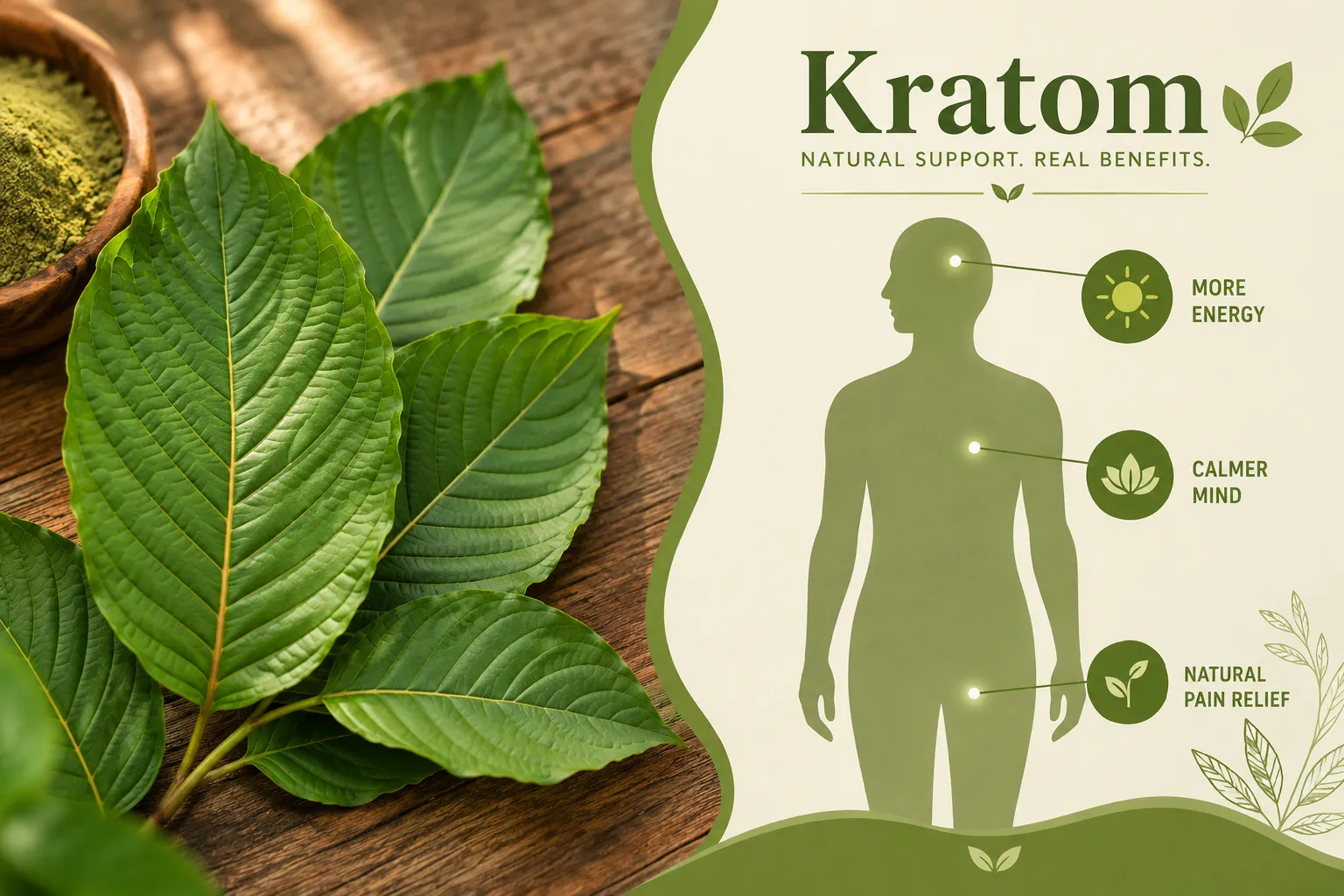
Start here: 1 to 2 grams is the correct first dose for any new user. This applies regardless of body weight, strain, or format (powder, capsule, tea).
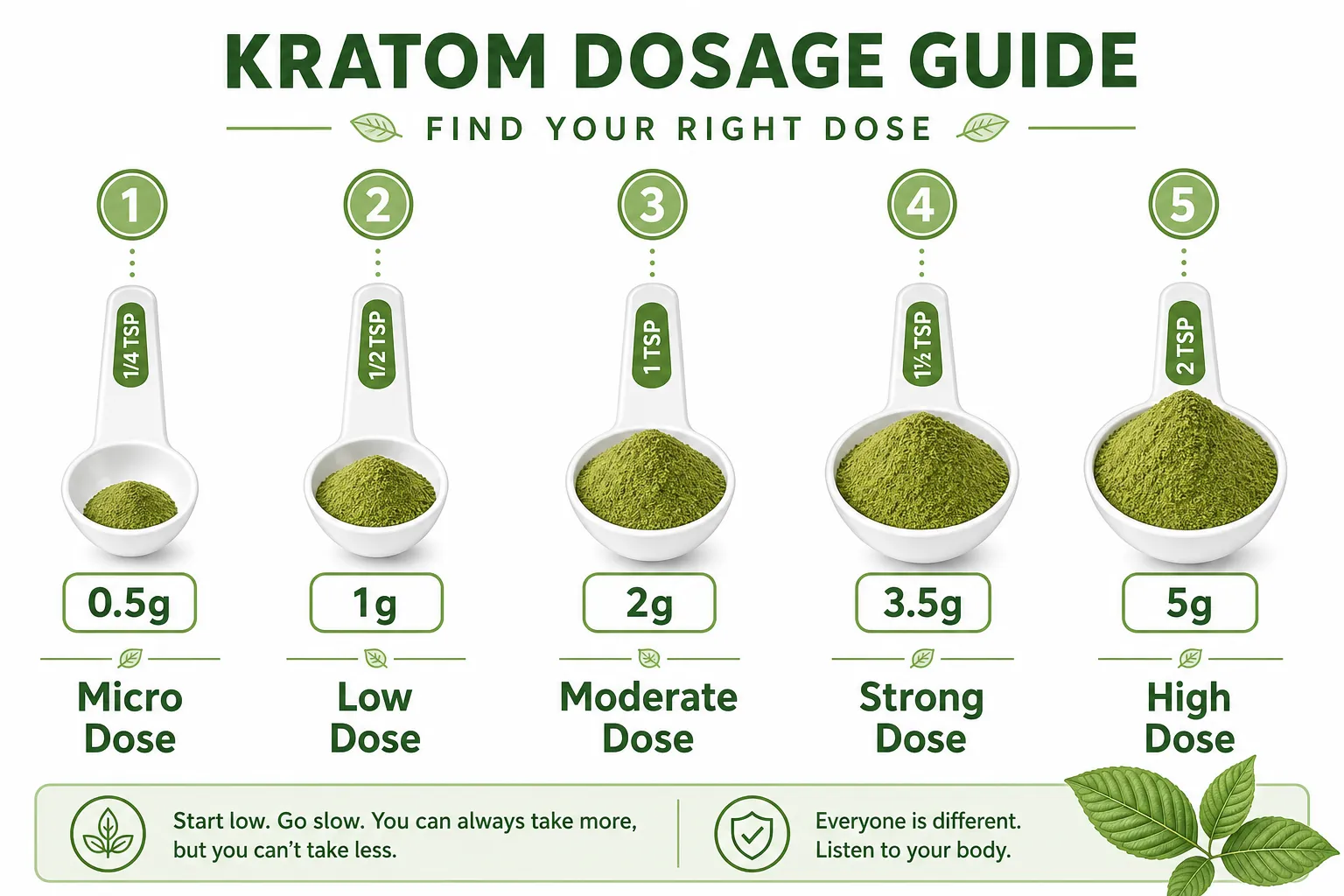
Beginner dosage tiers:
| Dose | Amount | Expected Effect |
|---|---|---|
| Micro | 0.5 to 1g | Minimal, useful for testing sensitivity |
| Low | 1 to 2g | Mild stimulation or calm, low side effect risk |
| Moderate | 2 to 4g | Noticeable effects, not recommended for first use |
| High | 5g+ | Strong sedation, high nausea risk for beginners |
Common mistake: New users assume they need 5 grams because that is what they read in online forums. Those reports come from users with established tolerance. For a first session, 5 grams is too much. The data confirms nausea, dizziness, and “the wobbles” (a kratom-specific visual disturbance) are the most frequently reported negative outcomes in first-time users who start above 4 grams.
For a deeper look at kratom dosage across experience levels, that guide covers the full range with user outcome data.
What Is a Safe Starting Dose of Kratom for First-Time Users
A safe starting dose is 1 gram for anyone with no prior experience. If 1 gram produces no noticeable effect after 45 minutes, add 0.5 grams. Repeat this step-by-step process until effects are felt, stopping at 3 grams maximum for the first session.
Step-by-step first-time protocol:
- Weigh 1 gram on a digital scale. Do not estimate by the teaspoon.
- Take the dose with 8 oz of water.
- Wait 45 minutes. Note any physical or mental changes.
- If no effect, add 0.5 grams and wait another 30 minutes.
- Stop at 3 grams total for the first session.
- Record the dose, strain, vendor, and effects in a simple log.
Practical takeaway: A digital scale is non-negotiable. One level teaspoon of kratom powder can range from 2 to 4 grams depending on grind and density. Measuring by volume is a consistent source of overdosing in beginners.
If you’re using capsules instead of powder, see how many kratom capsules to take for size-specific gram conversions.
How Long Does It Take to Feel Kratom Effects
Kratom effects typically begin 15 to 30 minutes after ingestion on an empty stomach, and 30 to 60 minutes after a light meal. Peak effects occur at 1 to 1.5 hours and last 3 to 5 hours depending on dose and strain.
The structure shows a clear pattern: beginners who redose before the 45-minute mark are the most likely to accidentally take too much. This is because they assume the kratom is not working, add more, and then both doses hit simultaneously.
For a detailed breakdown of onset variables, see how long does kratom take to kick in.
Can You Take Too Much Kratom at Once
Yes. Taking too much kratom produces a predictable set of negative effects. The threshold where adverse effects become likely in new users is around 5 grams. Above 8 grams, serious reactions including vomiting, rapid heart rate, and extreme sedation are documented.
Clear signal of overdose in new users:
- Nausea within 20 to 40 minutes of dosing
- “The wobbles” (difficulty focusing eyes, visual instability)
- Dizziness when standing
- Cold sweats
- Vomiting
If these occur, stop dosing immediately. Drink water, lie down, and wait. Symptoms typically resolve within 2 to 4 hours. If symptoms are severe or involve difficulty breathing, seek emergency care.
For context on maximum safe limits, see how much kratom can you take.
What Are the Side Effects of Taking Kratom
At low doses (1 to 3 grams), side effects in new users are usually mild: slight nausea, dry mouth, or mild stimulation. At moderate doses (3 to 5 grams), constipation, appetite suppression, and increased sweating are common. At high doses, sedation, nausea, and cognitive impairment are the primary risks.
Long-term risks include:
- Physical dependence with daily use (reported within 4 to 8 weeks of consistent use)
- Tolerance buildup requiring higher doses for the same effect
- Withdrawal symptoms if use is stopped abruptly
The data confirms that dependence risk increases sharply with daily use. For information on withdrawal timelines, the kratom withdrawal guide provides a structured breakdown.
Does Kratom Dosage Depend on Body Weight
Body weight has a minor influence on kratom dosage, but it is not the primary factor. Individual sensitivity, liver enzyme activity, and gut motility matter more. A 200-pound person with high sensitivity may respond strongly to 1.5 grams, while a 130-pound person with low sensitivity may feel little at the same dose.
What to prioritize instead of body weight:
- Prior experience with opioid-acting substances (increases baseline tolerance)
- Whether the stomach is empty or full
- Strain potency and vendor batch quality
- Time of day (kratom is more sedating in the evening for most users)
How Do I Know If Kratom Is Not Working for Me
If no effects are felt after a full 60 minutes at 2 grams, the most likely explanations are: low-quality product, incorrect storage (heat and humidity degrade alkaloids), or individual metabolic variation.
Step by step troubleshooting:
- Verify the vendor has third-party lab reports showing alkaloid content.
- Check storage conditions. Kratom stored in direct sunlight or humid environments loses potency fast.
- Try a different strain. Some users respond better to green veins than red veins, and vice versa.
- Confirm the product is not expired. Most kratom powder has a 1-year shelf life when stored properly.
What to skip: Doubling the dose to “force” an effect. This is the fastest path to a negative first experience.
What Is the Difference Between Kratom Strains and Dosing
Strain affects both the character of effects and the effective dose range. Red vein strains are generally more sedating and forgiving at low doses. White vein strains are stimulating and more likely to cause anxiety or jitteriness in beginners. Green vein strains fall in the middle.
Strain guide for beginners:
- Red Bali or Red Borneo: Best starting strains. Calming, predictable, lower nausea risk. See the Red Bali kratom guide for dosage specifics.
- Green Malay or Green Maeng Da: Moderate stimulation, good for daytime use at 1.5 to 2.5 grams.
- White Maeng Da: Stimulating, higher anxiety risk for sensitive users. Not recommended as a first strain.
- Maeng Da (any vein): Potent. Lower doses apply. See the Maeng Da kratom guide for dosing adjustments.
Should I Take Kratom on an Empty Stomach or With Food
Taking kratom on an empty stomach produces faster, stronger effects. Taking it after a meal slows onset and reduces peak intensity. For beginners, a light meal 1 to 2 hours before dosing is the better choice. It reduces nausea risk while still allowing clear effects.
Proven pattern: Users who take kratom on a completely empty stomach report nausea at lower doses than those who have eaten. The tradeoff is a slightly delayed onset with food, but the experience is more controlled and more comfortable.
How Often Can You Take Kratom Safely
The safest frequency for long-term use is 2 to 3 times per week with at least one full day between sessions. Daily use builds tolerance within 2 to 4 weeks and increases dependence risk significantly.
What to prioritize: Spacing sessions out. Consistent result: users who take kratom 2 to 3 times per week report stable effects for months. Users who dose daily report needing 50% to 100% more kratom within 4 to 6 weeks to achieve the same effect.
First-Time Kratom Dose Guide
Kratom vs Other Supplements for Beginners
Compared to common supplements like caffeine or ashwagandha, kratom has a narrower therapeutic window, meaning the gap between an effective dose and an uncomfortable dose is smaller. Caffeine at 200mg is unlikely to cause serious side effects in most adults. Kratom at 6 grams in a new user can cause significant nausea and dysphoria.
Choose kratom if: The goal is pain relief, anxiety reduction, or opioid withdrawal support, and other options have not worked. Kratom has a legitimate use case in these areas based on user-reported outcomes and alkaloid pharmacology.
What to skip: Kratom as a casual energy supplement when caffeine or green tea would serve the same purpose with less risk and more predictability.
What Mistakes Do First-Time Kratom Users Make
Based on testing and user-reported outcomes, these are the most common first-time errors:
- Starting too high. Taking 4 to 5 grams because a forum post said that is the “real” dose.
- Not using a scale. Measuring by teaspoon introduces 100% or more variance in actual dose.
- Redosing too early. Adding more before the first dose has fully kicked in.
- Choosing the wrong strain. Starting with a potent white vein instead of a milder red or green.
- Buying from unverified vendors. Products without lab reports may contain contaminants or inconsistent alkaloid levels. For guidance on sourcing, see how to buy kratom safely.
- Not tracking the experience. Without a log, it is impossible to replicate a good result or avoid a bad one.
Is Kratom Safe for Everyone or Are There People Who Should Not Take It
Kratom is not safe for everyone. Several groups face elevated risk and should avoid it entirely.
Do not take kratom if you:
- Are currently taking opioid medications (risk of additive respiratory depression)
- Use benzodiazepines or alcohol regularly
- Take MAOIs or SSRIs (interaction risk)
- Are pregnant or breastfeeding
- Have liver disease (kratom is metabolized hepatically)
- Have a history of substance use disorder
Clear signal: If any of the above applies, the risk-benefit calculation does not favor kratom use. Consult a physician before proceeding.
For users in specific locations, kratom’s legal status also varies. Check is kratom legal in Texas or your local jurisdiction before purchasing.
Frequently Asked Questions
What is the minimum effective dose of kratom for a beginner?
Most beginners feel effects at 1 to 2 grams. Some sensitive individuals respond to as little as 0.5 grams. Start at 1 gram and adjust upward in 0.5-gram increments.
Can I take kratom capsules instead of powder for my first time?
Yes. Capsules make dosing more precise and eliminate the bitter taste. A standard size 00 capsule holds approximately 0.5 grams of powder.
How long do kratom effects last at a beginner dose?
At 1 to 2 grams, effects typically last 2 to 3 hours. Higher doses extend duration to 4 to 5 hours. For a full breakdown,
Is it safe to mix kratom with caffeine?
Mixing kratom with caffeine increases stimulant effects and heart rate. Not recommended for first-time users. Evaluate kratom’s effects in isolation before combining it with anything.
What is the best kratom strain for a first-time user?
Red Bali or Red Borneo. Both are predictable, calming, and have a lower nausea profile than white or green veins at equivalent doses.
How do I store kratom to maintain potency?
Store in an airtight container away from heat, light, and humidity. Properly stored kratom powder retains potency for up to 12 months.
Will kratom show up on a drug test?
Standard drug tests do not screen for kratom alkaloids. Specialized tests can detect mitragynine. For a full detection guide, .
Can I drink kratom as a tea for my first time?
Yes. Kratom tea is a common preparation. Boiling degrades some alkaloids, so effects may be slightly milder than powder. Dose the same dry weight as you would for powder.
What should I do if I take too much kratom?
Stop dosing immediately. Drink water, lie down in a comfortable position, and wait. Symptoms typically resolve in 2 to 4 hours. Seek emergency care if breathing is affected.
Is kratom addictive?
Kratom carries dependence risk with regular use. Daily use for 4 to 8 weeks is sufficient for physical dependence to develop in many users. Limiting use to 2 to 3 times per week significantly reduces this risk.
Conclusion
The answer to how much kratom to take first time is straightforward: 1 to 2 grams, measured on a digital scale, with a light meal beforehand. Start here. Add 0.5 grams at a time if needed. Stop at 3 grams for the first session.
The structure shows that most negative first experiences come from one of two sources: too high a starting dose, or an unverified product. Both are avoidable. Consistent results follow from consistent process.
Eric Larson is a researcher and writer passionate about ethnobotany and traditional plant knowledge. With a background in anthropology and sustainable agriculture, he explores how indigenous communities have used natural remedies for generations. Eric believes in bridging the gap between ancestral wisdom and modern science through clear, honest storytelling. His work focuses on documenting plant-based traditions while emphasizing safety, sustainability, and cultural respect. When not writing, Eric volunteers with botanical conservation projects and enjoys hiking in search of medicinal plants in their natural habitats.
Nathaniel is deeply interested in cultural traditions and the way natural elements shape human expression. He has studied how communities integrate plants into their daily rituals, folklore, and heritage. Nathaniel believes these practices hold timeless lessons about respect for nature and the importance of cultural continuity. His work centers on appreciating and preserving these insights with curiosity and authenticity, always highlighting the link between the past and the present.